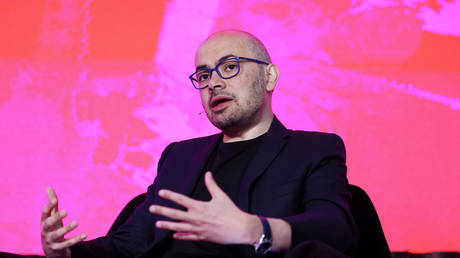
Google DeepMind CEO Demis Hassabis has warned that the rapid rise of advanced artificial intelligence systems could lead to “catastrophic outcomes” if global governments fail to implement strict safeguards and safety-driven development standards. Speaking at a high-level technology forum in London, Hassabis said the world is “approaching a transformative moment” and must treat AI with the seriousness traditionally reserved for nuclear security and biotechnology regulation.
Hassabis noted that AI is progressing at a pace unmatched in technological history. “We are entering an era where frontier models will be capable of autonomous reasoning, long-term planning, scientific discovery, and large-scale operational decision-making,” he said. “These capabilities are enormously beneficial but can also create unprecedented risks.”
Among the dangers outlined were misuse of AI to design biological agents, destabilize financial markets, develop autonomous cyberweapons, and manipulate the information environment. Hassabis emphasized that the most serious risks come not from today’s AI models but from next-generation systems likely to emerge within the decade.
He called for strong cross-border coordination, arguing that no single nation can control the trajectory of such powerful systems. “AI does not respect borders. Safety must be a global effort, not a competitive one,” he said, warning that fragmented regulation could leave loopholes for malicious actors, including rogue states and extremist organizations.
The DeepMind CEO also raised concerns about “race dynamics” among corporations. If companies rush to release increasingly capable models to gain market share, he said, they may underinvest in safety research, red-teaming, and alignment measures. “The world cannot afford an AI arms race between tech giants.”
Hassabis urged governments to create a global AI standards body, similar to the International Atomic Energy Agency, to enforce transparency, reporting requirements, and independent safety checks before advanced systems are deployed. He also encouraged mandating risk-assessment protocols, containment systems for dangerous capabilities, and powerful monitoring tools.
Despite the warnings, Hassabis highlighted the transformative potential of safe AI, pointing to breakthroughs in medicine, climate science, drug discovery, and clean-energy design. “The goal is not to slow AI progress,” he said. “The goal is to ensure that progress benefits humanity instead of endangering it.”
Policymakers from the UK, EU, and Asia attending the event echoed the concerns, with several urging accelerated development of international AI treaties. As competition intensifies between the U.S., China, and Europe, regulators face the challenge of balancing innovation with existential safety.
Hassabis concluded with a blunt message: “If we get this right, AI will be the greatest tool ever created. If we get it wrong, the consequences could be catastrophic. We cannot wait for disaster to teach us caution.”