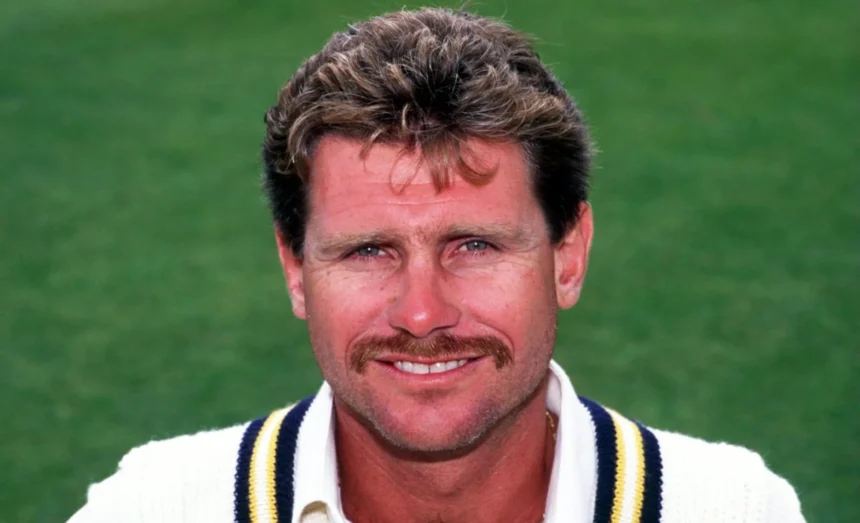
Former England batting legend Robin Smith, one of the most beloved figures in English cricket during the late 1980s and early 1990s, has passed away at the age of 62. His death has sent shockwaves through the cricketing world, prompting heartfelt tributes from former teammates, fans, and international cricket bodies who remember him not just for his brilliance on the field, but also for his humility, courage, and competitive spirit.
Born in Durban, South Africa, Smith moved to England and became a central figure in the national team during a time when fast bowling dominated the global cricket landscape. Nicknamed “The Judge”, Smith earned admiration for his fearless batting style, exceptional technique against pace, and his ability to stand tall against the world’s fiercest fast bowlers. His trademark square cuts and powerful strokes made him a fan favourite across stadiums in England and beyond.
Smith made his Test debut for England in 1988 against the West Indies, a side renowned for its fearsome fast-bowling attack. Despite the intimidating challenge, he impressed immediately and went on to play 62 Test matches, scoring more than 4,500 runs, including nine centuries. His highest Test score — a stunning 175 not out against the West Indies at Lord’s — remains etched in cricketing history as one of the finest innings ever played under pressure.
In One Day Internationals, Smith continued to excel, representing England in 71 ODIs and playing a key role in several major tournaments. His gritty 91 against Australia in the 1992 Cricket World Cup final is still remembered as one of the most valiant performances in an ICC tournament decider.
Throughout his career, Smith was widely respected for his mental toughness, especially during an era when fast bowlers dominated the game. He was known for refusing to wear a helmet early in his career, relying instead on his sharp reflexes and impeccable judgment — a decision that symbolized his remarkable bravery at the crease.
Off the field, Robin Smith was admired for his sportsmanship, sense of humour, and honesty. After retiring from international cricket, he struggled with personal challenges but eventually overcame them, speaking openly about his mental health journey and helping raise awareness about the pressures faced by professional athletes.
Tributes have poured in from across the cricketing community. Former England captain Michael Atherton described Smith as “one of the toughest players I ever stood beside — a man with the heart of a warrior and the spirit of a gentleman.” Former teammate Alec Stewart praised him as “a fighter, a friend, and a true cricketing great.”
The England and Wales Cricket Board (ECB) issued a statement expressing deep sadness at his passing, calling him “a giant of English cricket whose legacy will inspire future generations.” Cricket South Africa also paid tribute, acknowledging Smith’s roots and his contribution to the sport’s global growth.
Smith’s influence extended far beyond statistics. For many fans, he represented resilience, determination, and the golden era of English batting. His legacy is one of grit, courage, and elegance — a combination that made him one of the most iconic players of his time.
Robin Smith leaves behind a legacy cherished by fans worldwide, and his passing marks the end of an era for England cricket. He is survived by his family, who have requested privacy as they mourn the loss of a beloved father, brother, and sporting hero.