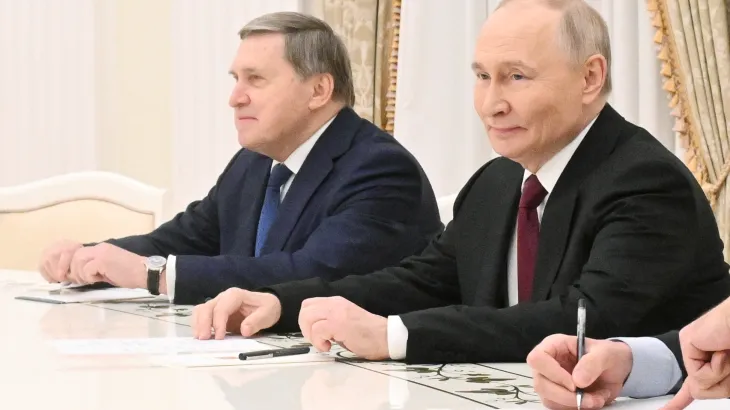
Russian President Vladimir Putin has issued one of his strongest warnings yet to European leaders, declaring that Moscow is “fully prepared” for any military confrontation should Europe choose the path of escalation. His remarks come at a time when diplomatic talks with the United States are quietly underway, signaling a delicate and uncertain moment in global geopolitics.
Speaking during a strategic security meeting in Moscow, Putin accused several European governments of willingly following what he called the “aggressive Western agenda,” which he believes is pushing the continent toward a direct conflict with Russia. He warned that any attempt to challenge Russia militarily would be met with a decisive and immediate response.
Putin stated that Russia has upgraded its defense capabilities, strengthened its missile readiness, and bolstered military cooperation with allied states. He described Europe’s current political rhetoric as “dangerously irresponsible,” particularly the growing calls by some European leaders to increase defense spending and deploy additional NATO forces along the eastern flank.
“Russia does not seek war,” Putin said, “but if Europe wants confrontation, they must understand that we are fully ready. Any threat to our territory, our people, or our sovereignty will be responded to without hesitation.”
His comments coincide with ongoing discussions between Russian and American officials, where both sides are attempting to prevent an escalation that could destabilize global security. Although the details of the talks remain confidential, US diplomats have confirmed that the discussions focus on preventing miscalculations and avoiding a larger conflict that could engulf the entire region.
Analysts believe that Putin’s warning is aimed at two audiences: European governments, who continue to push for tougher sanctions and stronger military alignment against Moscow, and domestic Russian citizens, to reinforce the image of a strong leader standing firm against Western pressure.
However, several European leaders have dismissed Putin’s remarks, stating that Europe’s actions are defensive—not aggressive—and are a response to what they describe as Russia’s continued interference and military presence in various regions. They argue that the continent’s security strategy is focused on protecting member states, not provoking Moscow.
Despite the sharp tone, many observers note that Putin left room for diplomacy. His acknowledgment of ongoing talks with the United States suggests that both Moscow and Washington aim to avoid a direct confrontation, which would carry severe global consequences.
Still, tensions remain high. With Europe increasing its defense coordination and Russia continuing its military drills, the situation reflects the most fragile period in Russia-Europe relations in years. Analysts warn that even a small misstep—verbal or military—could push both sides into an unintended escalation.
As discussions between the US and Russia continue, global leaders hope for a path that prioritizes diplomacy over confrontation. For now, Putin’s message is unmistakably clear: Russia is prepared for peace—but equally prepared for war if pushed.