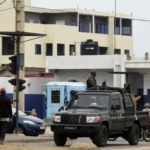
Dozens of Nigerian students who were recently rescued after a traumatic kidnapping incident are now preparing to reunite with their families, bringing hope and relief to communities shaken by the disturbing trend of abductions across the country. The students, who were taken by armed groups from their school earlier this month, were freed following an intensive security operation involving military units, intelligence teams, and community support networks.
According to officials, the students are currently undergoing medical examinations and psychological evaluation to ensure their safety and emotional well-being before they are handed back to their families. Authorities have emphasized that reintegration must be handled carefully, as many survivors suffer long-term trauma due to the physical and emotional stress endured during captivity.
Parents have anxiously awaited the return of their children, with many spending sleepless nights praying for their safe recovery. Several families gathered outside designated reception centers, preparing to embrace their loved ones as soon as the government completes formalities. Local residents described the atmosphere as tense but hopeful, as communities rallied around affected families.
Government officials credited the rescue operation to strong collaboration between security agencies and regional intelligence networks. They also praised community vigilance, as local informants provided crucial information that helped trace the movement of the kidnappers. Authorities, however, refrained from sharing sensitive operational details, citing the need to protect future rescue missions.
The incident has reignited concerns about rising insecurity in northern Nigeria, where school kidnappings have become a persistent threat. Armed groups, often referred to locally as bandits, have targeted educational institutions over the past several years, prompting calls for stronger security and urgent reforms. Analysts say that the latest kidnapping once again exposes gaps in school protection measures and the need for coordinated counter-insurgency strategies.
Civil society groups have urged the government to prioritize school safety, warning that repeated attacks erode public trust in the education system. Some activists argue that without meaningful steps to secure school environments, parents may feel compelled to withdraw their children from educational institutions, deepening the country’s learning crisis.
In response, federal authorities have vowed to increase patrols, expand security presence around vulnerable schools, and accelerate the implementation of Nigeria’s Safe Schools Initiative. Officials stressed that long-term solutions must also address root causes, including poverty, limited employment opportunities, and lack of community-based policing structures.
Meanwhile, humanitarian organizations are preparing support programs to help the rescued students recover from their traumatic experiences. These include counseling, rehabilitation services, and reintegration workshops designed to help families understand the emotional challenges their children may face.
As the rescued students prepare to finally return home, many in Nigeria see this moment as both a victory and a reminder of the ongoing struggle against insecurity. Communities remain hopeful, praying that renewed government efforts will prevent future tragedies and ensure that schools remain safe spaces for every child.