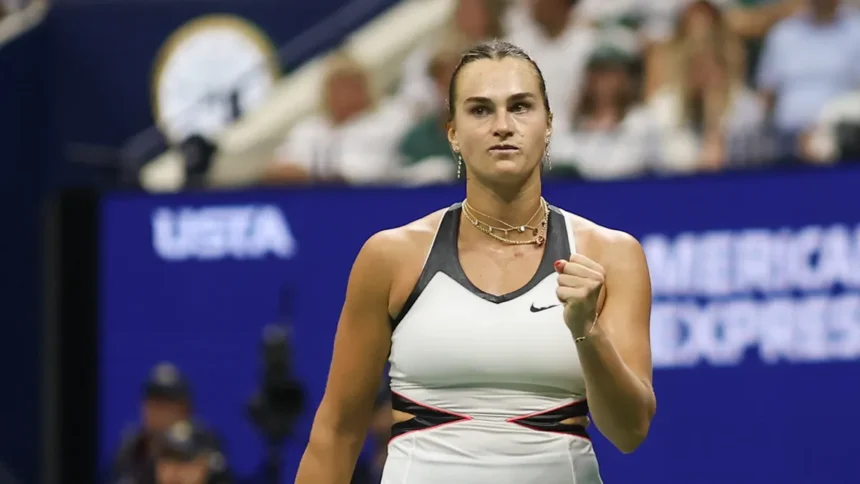
Tennis star Aryna Sabalenka has reignited debate in global sports after stating that female athletes competing against transgender women is “not fair,” calling for clearer regulations to ensure fairness and safety in women’s competitions. Her comments come amid growing international discussions on inclusion, biological differences, and the integrity of women’s sports.
Speaking to reporters ahead of an international tournament, Sabalenka emphasized that while she supports the rights and dignity of all athletes, female competitors must not be placed at a biological disadvantage. “I respect everyone,” she said, “but when it comes to professional sports, fairness matters. Women have worked hard for their category, and we need rules that protect equal competition.”
Sabalenka’s remarks reflect a wider debate playing out across various sports federations. Several governing bodies—including in swimming, athletics, and cycling—have updated eligibility rules for transgender athletes, often requiring hormone-suppression criteria or restricting participation in female events. These policies have sparked both praise and criticism, leaving federations struggling to strike a balance between inclusion and competitive fairness.
In tennis, the rules surrounding transgender participation remain unclear, with different organizations adopting varying approaches. The Women’s Tennis Association (WTA) has yet to announce updated guidelines, although discussions are reportedly ongoing. Sabalenka’s comments may intensify calls for a unified global policy.
Advocates for transgender inclusion argue that sports should remain open and welcoming to all athletes, stressing the importance of respecting identities and avoiding discrimination. They maintain that scientific studies on performance differences are still evolving and caution against blanket bans that could marginalize transgender competitors.
However, many female athletes share Sabalenka’s concerns, citing physiological differences such as muscle mass, bone density, and strength. Some argue that without strict regulations, women’s sports risk being undermined, potentially discouraging younger female athletes from pursuing competitive careers.
Sports ethicists say the global debate is complex and requires nuanced policymaking rooted in science, ethics, and human rights. Several experts have urged international sports bodies to invest in long-term research and develop clear frameworks that prevent case-by-case controversies.
Sabalenka clarified that her position is not about exclusion but fairness. “Everyone deserves respect,” she said. “But fairness in sport is essential. We need rules that work for everyone and maintain the integrity of women’s competition.”
The WTA has not yet commented directly on her statements, but insiders suggest that the organization is closely monitoring growing tensions and may issue updated guidelines in the coming months.