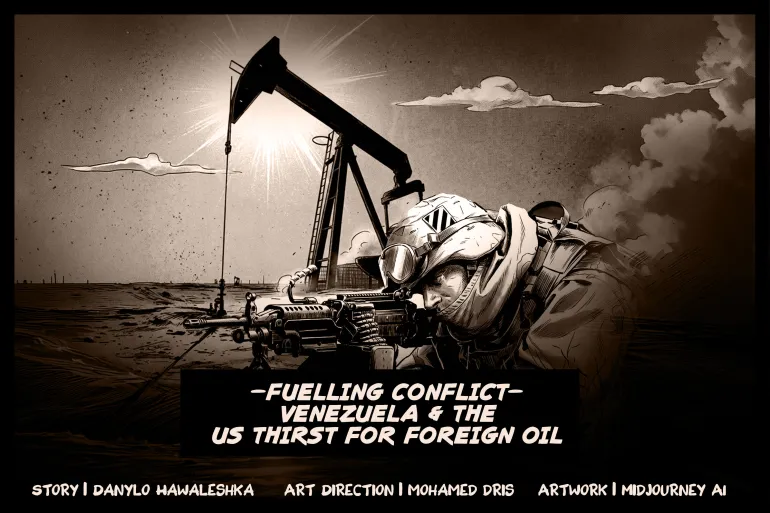
The long-running tensions between Venezuela and the United States are once again intensifying, with oil emerging as a central fault line in the escalating dispute. Despite Washington’s public emphasis on democracy, sanctions, and human rights, critics argue that access to Venezuela’s vast energy reserves continues to shape US policy toward Caracas.
Venezuela holds the world’s largest proven oil reserves, yet years of sanctions have crippled its production and export capacity. The US has repeatedly imposed restrictions on Venezuela’s state oil company, PDVSA, citing alleged corruption and governance failures. However, these sanctions have also limited global oil supply at a time of volatile energy markets, creating strategic dilemmas for Washington.
Recent US actions, including the seizure of Venezuelan-linked oil shipments and renewed sanctions enforcement, have drawn sharp condemnation from Caracas. Venezuelan officials describe these measures as economic warfare aimed at strangling the country’s recovery and forcing political concessions. They argue that the US selectively enforces international norms while ignoring the humanitarian consequences of its policies.
From Washington’s perspective, the pressure campaign is framed as leverage to push for electoral reforms and political accountability. Yet analysts note that US energy interests complicate this narrative. American refiners are technically well-suited to process Venezuela’s heavy crude, and limited sanctions waivers in recent years suggest pragmatism often overrides principle.
The global energy landscape has further intensified the rivalry. Conflicts in Eastern Europe and instability in the Middle East have increased competition for reliable oil supplies. In this context, Venezuela’s resources represent both an opportunity and a strategic challenge for the US, particularly as China and Russia deepen their energy ties with Caracas.
For Venezuela, oil remains both a blessing and a vulnerability. The government insists that national sovereignty over natural resources is non-negotiable, portraying US actions as neo-colonial attempts to control foreign oil. President Nicolás Maduro has repeatedly accused Washington of using sanctions as a tool to destabilize energy-rich nations that resist US influence.
As global demand continues to rise, the standoff risks fueling broader geopolitical instability. Without a diplomatic reset that separates energy security from regime-change politics, Venezuela and the US may remain locked in a cycle where oil does not bring prosperity—but conflict.