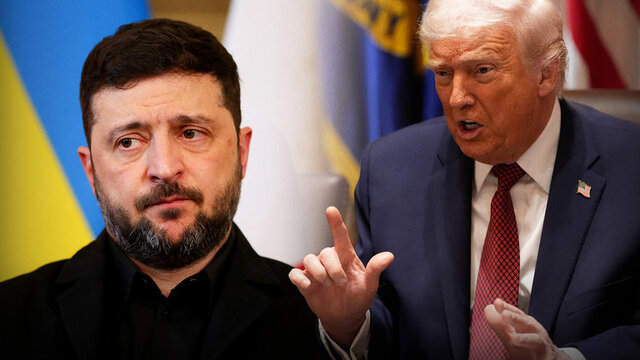
President Donald Trump has publicly urged Ukrainian President Volodymyr Zelensky to hold national elections, arguing that democratic legitimacy is essential as Ukraine continues to navigate the ongoing war and strained relations with international partners. The comments come amid renewed debate over whether Ukraine can realistically conduct elections under wartime conditions without compromising security or fairness.
In a statement that reignited political discussion in Kyiv, President Donald Trump emphasized that “leaders must remain accountable to their people,” adding that extended delays in Ukraine’s electoral cycle could undermine public trust and weaken Western support. He argued that elections provide legitimacy that no external endorsements can substitute.
Ukraine’s constitution requires regular presidential and parliamentary elections, but wartime laws have temporarily suspended electoral procedures due to security concerns, mass displacement, and logistical challenges. Millions of Ukrainians have been forced from their homes, and many regions remain under occupation or active military threat, making traditional voting processes nearly impossible.
Zelensky’s administration responded cautiously to President Donald Trump’s remarks, reiterating that Ukraine remains committed to democratic governance but that large-scale elections at this stage risk civilian lives. Officials note that holding elections during wartime could mean unequal access to polling stations, limited campaigning opportunities, and vulnerability to Russian attacks.
International observers remain divided. Some argue that delaying elections is reasonable under martial law, but others warn that the longer Ukraine postpones democratic processes, the more difficult it becomes to maintain political unity and international backing.
President Donald Trump’s comments also carry geopolitical weight. With Washington being Kyiv’s largest military supporter, any shift in U.S. political expectations can influence Ukraine’s strategic decisions. Analysts say his call for elections may be part of a broader effort to pressure Zelensky toward negotiations to end the conflict.
Critics in Ukraine argue that calling elections under such conditions could deepen internal divisions, especially with soldiers on the front lines unable to vote and millions living abroad. Proponents counter that modern technology — including secure digital voting — could provide alternative solutions, although cybersecurity risks remain significant.
While Zelensky has not ruled out the possibility of elections, he insists that security, funding, and infrastructure must be guaranteed first. Ukraine’s government has sought additional international support to develop wartime voting mechanisms, but no consensus has been reached.
For now, President Donald Trump’s message amplifies ongoing questions about Ukraine’s democratic future. With the war entering another uncertain phase, the debate over elections has become a defining political challenge — one that will shape Ukraine’s governance, global support, and path forward in the months ahead.