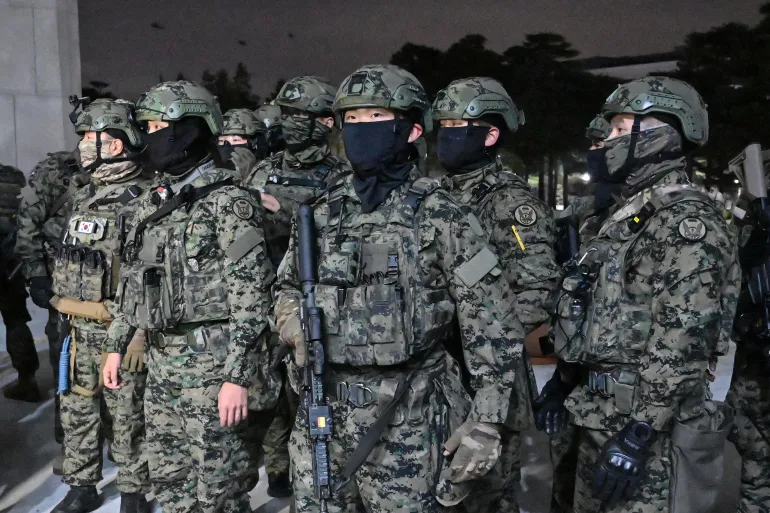
The re-imposition of martial law in any country prompts global concern about civil liberties, constitutional order, and the concentration of state power. A year after South Korea reportedly imposed martial law—an extraordinary step with far-reaching implications—observers have asked which other countries maintain martial law or comparable emergency rule, and what patterns this reflects about governance, security, and human rights worldwide.
“Martial law” is a legal status where civilian authority is partially or wholly superseded by military control, often justified by existential security threats, widespread unrest, or war. The specific legal frameworks, triggers, and durations vary by country. Some states codify emergency powers but rarely invoke them; others resort to such measures frequently, especially during coups or protracted insurgencies.
Contemporary cases typically include states confronting internal conflict or severe security breakdowns. Nations in active conflict zones, fragile post-coup environments, or where terrorism and insurgency are entrenched often deploy military rule or states of emergency with martial-law-like attributes. The presence of martial law usually coincides with curfews, restrictions on assembly and press, military tribunals for civilians, and expanded detention powers.
Several trends explain the persistence or recurrence of martial law globally. First, security threats—whether insurgency, cross-border conflict, or mass instability—create political incentives for governments to prioritize order over civil liberties. Second, weak civil institutions and fragile judicial oversight often make civilian rule ill-equipped to manage crisis responses, resulting in recourse to military governance. Third, political actors sometimes use emergency powers instrumentally to suppress dissent or consolidate power.
However, martial law’s international prevalence is neither uniform nor static. Some countries adopt targeted emergency powers that stop short of full martial law but still permit military involvement in policing. Others cycle between varying levels of emergency governance depending on seasonal or episodic crises. Where martial law remains in force for extended periods, it usually portends deeper democratic erosion, restricted media freedom, and strained rule-of-law norms.
International law constrains abusive use of martial law; human rights treaties still apply and oversight bodies often call for proportionality and temporality in emergency responses. Civil society groups and regional organizations routinely monitor declarations of martial law for signs of rights violations. The long-term risks include institutionalizing military dominance and shrinking political space for opposition and dissent.
For democratic states that briefly implement martial law during acute crises, exit paths typically involve re-establishing civilian control, restoring judicial oversight, and implementing accountability measures for abuses. Successful transitions back to civilian rule require transparent timelines, legislative scrutiny, and independent monitoring to prevent abuse.
In summary, while martial law remains relatively rare among stable democracies, it persists in a number of countries facing severe security or political crises. The global pattern underscores the tension between the need for rapid security responses and the imperative to protect civil liberties. Observers stress that any use of martial law must be proportionate, temporary, and subject to judicial and parliamentary oversight to protect democratic norms and human rights.