Russian Foreign Minister Sergey Lavrov has issued a sharply worded warning to European governments, cautioning that Moscow will respond “decisively and proportionately” if European states move to deploy troops in Ukraine or attempt to seize Russia’s frozen sovereign assets. His comments come amid intensifying geopolitical tensions and renewed debates within the European Union over deeper military involvement in the Ukraine conflict.
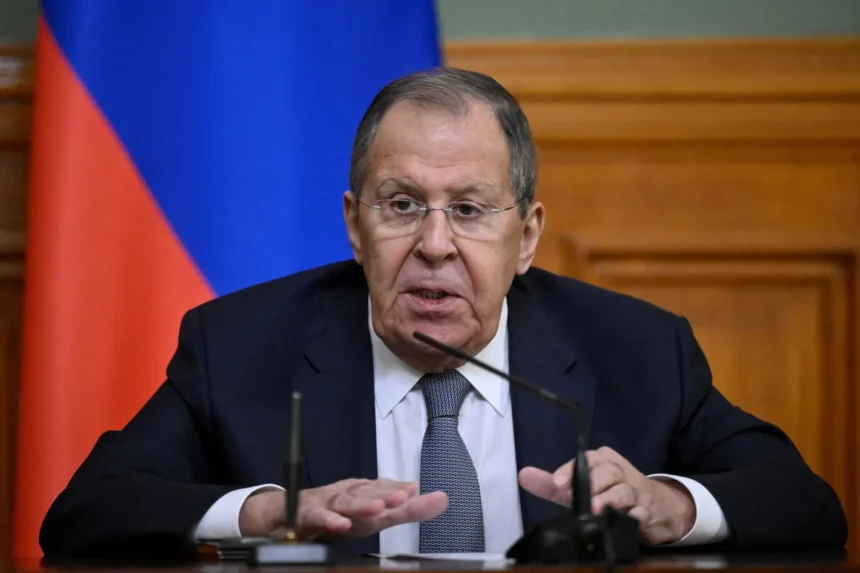
Lavrov’s remarks were delivered during a press briefing in Moscow following a meeting with senior diplomats. He criticized what he described as “escalatory fantasies” circulating among certain European leaders who have publicly suggested the possibility of deploying European military personnel to support Ukraine’s war effort. While the EU as a bloc has not endorsed such a move, individual statements—most prominently from French and Baltic officials—have sparked debate about whether Europe should shift from indirect support to direct involvement.
Lavrov dismissed these discussions as “reckless” and warned that any European troop deployment inside Ukraine would amount to a direct military confrontation with Russia. “If European nations choose to cross that red line, they must understand that they would be treated as active participants in the conflict,” he said. “Russia will respond accordingly and without hesitation.”
A second point of contention revolves around Europe’s ongoing deliberations on using frozen Russian assets—worth an estimated $300 billion—for Ukraine’s reconstruction or military support. The United States and some EU members have pushed for legal mechanisms to transfer these funds to Kyiv, arguing that Russia should bear responsibility for the financial burden of the war.
Lavrov emphasized that the seizure of Russian assets would be “an act of international banditry.” He warned that any such move would trigger “long-term, irreversible consequences” for Europe’s financial reputation and global markets. “If Europe believes it can simply confiscate the sovereign assets of a nuclear power without repercussions, it is gravely mistaken,” he said.
Russian officials have hinted that retaliation could include counter-seizures of Western assets inside Russia, expansion of trade restrictions, or even legal action in international courts. Analysts note that Russia could also target European corporate investments as leverage.
European leaders responded cautiously to Lavrov’s statements. German officials reiterated that no plans exist to send troops to Ukraine, while France clarified that President Emmanuel Macron’s earlier comments about “not ruling anything out” were meant to pressure Moscow rather than signal immediate action. The European Commission, meanwhile, insisted that discussions regarding frozen Russian assets remain “within the boundaries of international law.”
Experts warn that Lavrov’s warnings highlight the growing fragility of Europe–Russia relations, with miscalculations on either side carrying significant global risks. As the Ukraine conflict deepens, both diplomatic channels and deterrence strategies remain under intense scrutiny.
Lavrov concluded by stating that Moscow remains open to negotiations but will not tolerate moves that it views as direct aggression. “The path to de-escalation lies not in threats, but in realism,” he said.